Honouring Ada Lovelace in Hinckley
Celebrating the legacy of Ada Lovelace (1815-1852) — the first computer programmer — in her home town of Hinckley
About Ada
The First Computer Programmer
Augusta Ada King, Countess of Lovelace (1815-1852), known as Ada Lovelace, was born in London as the only child of poet Lord Byron and reformer Anne Isabella Milbanke. Anne separated from Lord Byron a month after Ada was born and left to reside in Kirkby Hall, Kirkby Mallory. Ada was to never see her father again.
Due to her reformist interests, Anne spent much of her time away. and so Ada was cared for by her grandmother. She made frequent journeys to the bank in Hinckley, taking Ada with her. Ada's experiences in Hinckley at a young age are well documented in the diary of Miss Lamont who was an early governess to Ada. This diary now forms part of the Lovelace Papers at the Bodleian Library in Oxford. Ada was enchanted by the town. To be denied a visit to Hinckley was Ada's worst punishment if she had been disobedient. The activity of stagecoaches, the hustle and bustle of the street fairs and markets, and numerous aristocratic visitors seeking the help of Dr. Chessher's orthopaedic services at this time created a vibrant environment that enthralled young Ada. Ada knew the museum cottages located opposite St. Mary's Parish Church, and other early 19th century buildings that still survive from this period in the centre of the town.
In 1822 Ada's grandmother died and her mother moved back to London with Ada where she was tutored privately. Ada showed an astonishing ability to grasp mathematical concepts from an early age. Ada's educational and social exploits brought her into contact with numerous eminent scientists and from the age of 18 her mathematical talents led to a long working relationship and friendship with fellow mathematician Charles Babbage.
Fascinated by the concept of a mechanical device that could make calculations, Babbage had developed the first of two Difference Engines, before creating the Analytical Engine, essentially a mechanical computer. Ada is credited with several computing firsts following her collaboration with Babbage, including describing a method of using the machine to calculate numbers which is credited as being the first published computer programme. Ada also set out a vision for future computers to go beyond number crunching, foreseeing how machines might write music or poetry and be utilised for numerous analytical purposes.
Ada married Sir William King in 1835, becoming Countess Lovelace in 1838 when her husband was elevated to the Earldom of Lovelace. They had three children: Byron, Anne Isabella, and Ralph Gordon. Ada died aged 36 in 1852. She was buried, at her request, next to her father at the Church of St. Mary Magdalene in Hucknall, Nottinghamshire. There is a large memorial to Ada, built by her mother, in the churchyard of the Church of All Saints, Kirkby Mallory.
It took nearly 100 years for Ada's visionary work to be referenced, including within a published paper by renowned mathematician and computer scientist Alan Turing in 1950. In the 70s, the United States Department of Defence developed the first computer coding language and named it in honour of Ada. The Military Standard reference manual was approved on December 10, 1980 (the anniversary of Ada’s birthday), and given the number MIL-STD-1815 after Ada's birth year in recognition of her work and vision.
Ada’s legacy has since been increasingly recognised, culminating in the annual Ada Lovelace Day (held each year on the second Tuesday in October). Launched in 2009, it is devoted to her memory and is an international celebration of the achievements of women in science, technology, engineering and maths (STEM).
The campaign to raise a statue of Ada Lovelace in Hinckley was led by the volunteers of the Ada Lovelace in Hinckley Community Interest Company with the support of various local residents and interest groups, North Warwickshire and South Leicestershire College and Hinckley & Bosworth Borough Council.
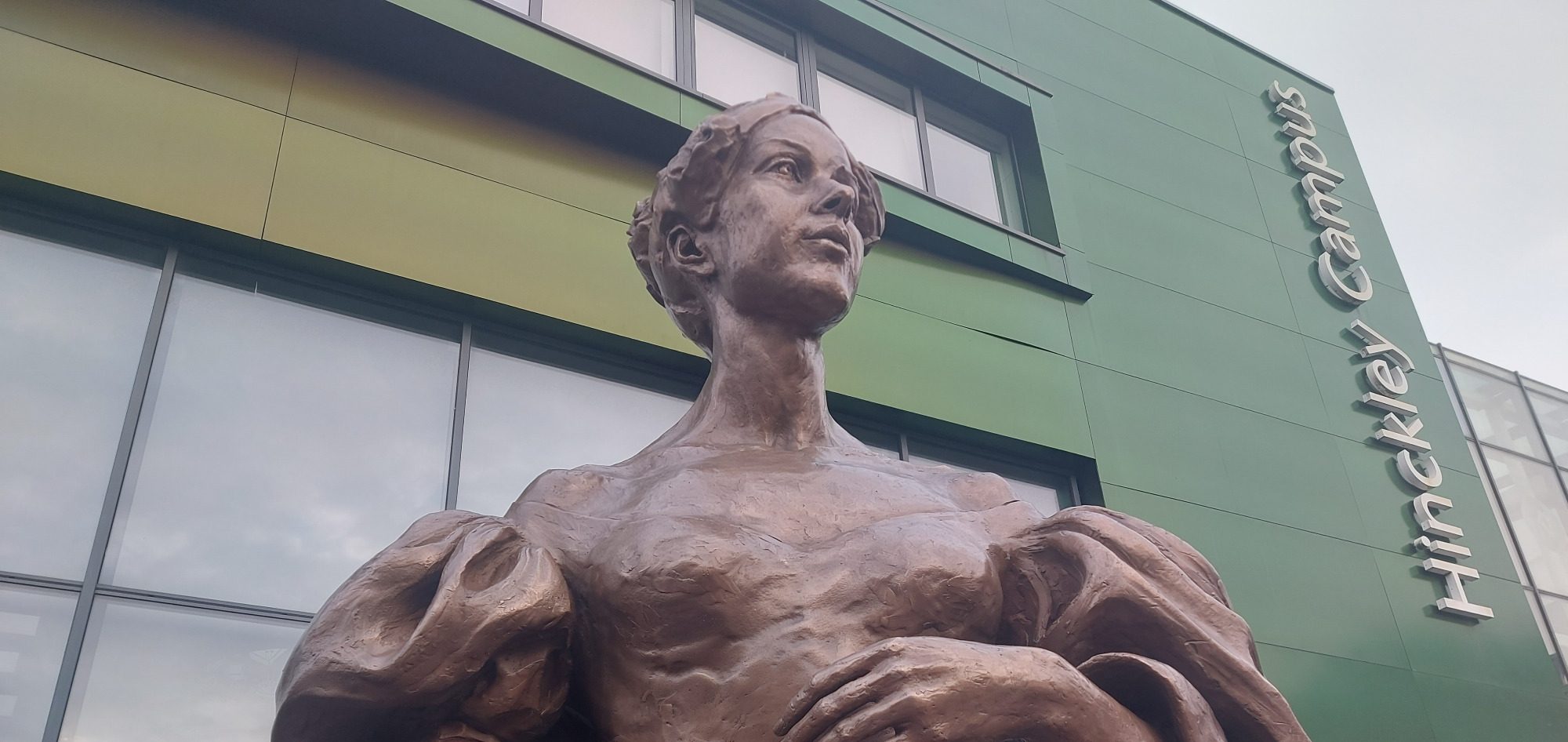
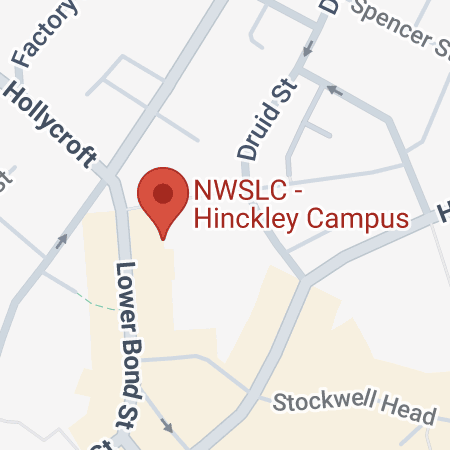
A bronze statue was created for the project by the sculptors Mary and Etienne Millner with the statue positioned outside the North Warwickshire and South Leicestershire College Hinckley Campus building to inspire girls and young women to study science, technology, engineering and mathematics.
The Team Behind The Statue
The Ada Lovelance statue, unveiled on January 31, 2026, was the result of years of hard work, devotion, and determintion.
Thanks to all who supported the project.
Learn more about the Ada Lovelace in Hinckley CIC and those who supported it.
The Founders
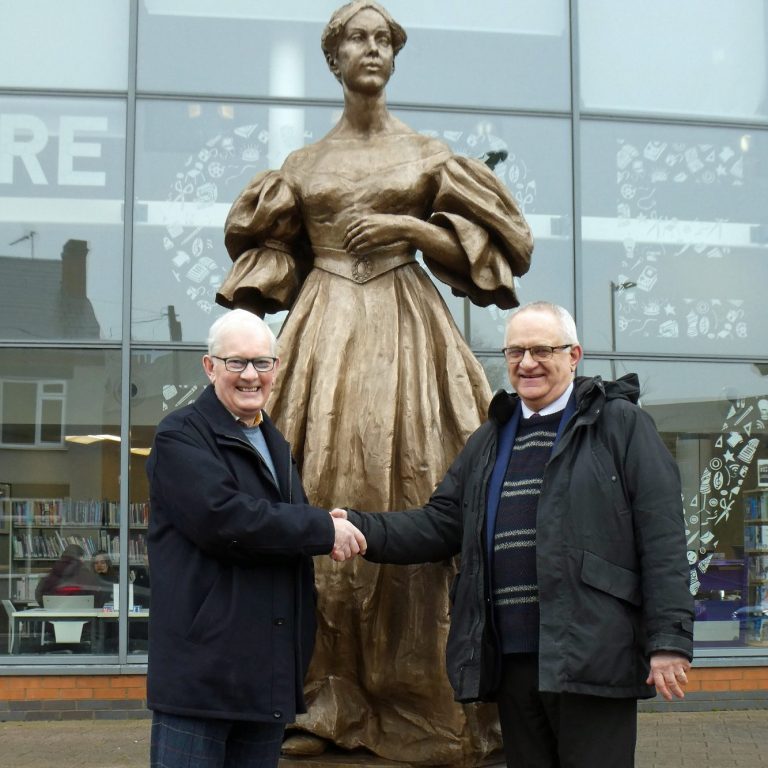
The statue honouring Ada in Hinckley was the vision of Greg Drozdz and Stan Rooney, who co-founded the Ada Lovelace in Hinckley CIC.
The Artists
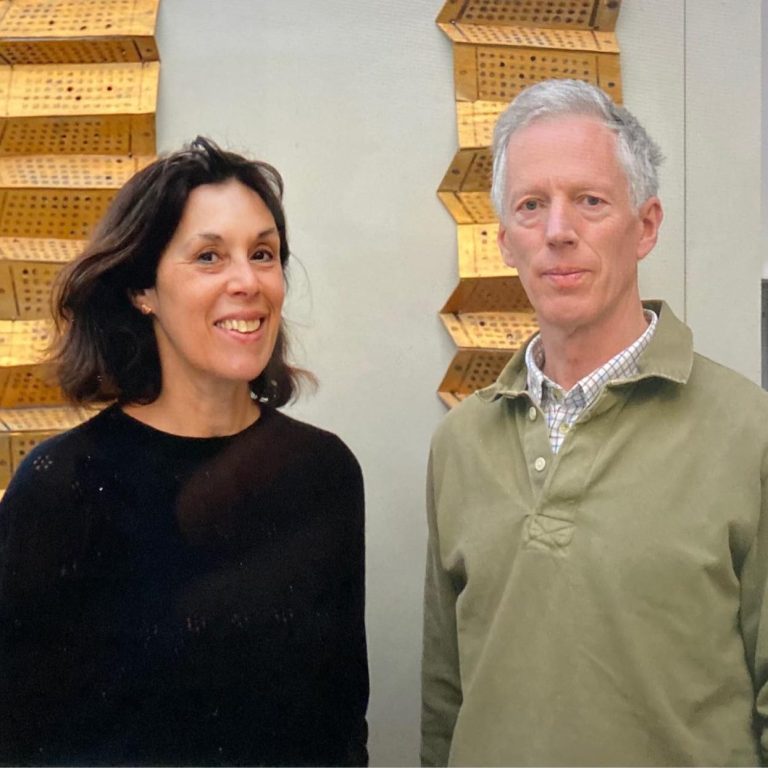
The life-size and a half bronze statue of Ada Lovelace was created by artists Etienne Millner and Mary Millner.
The Location
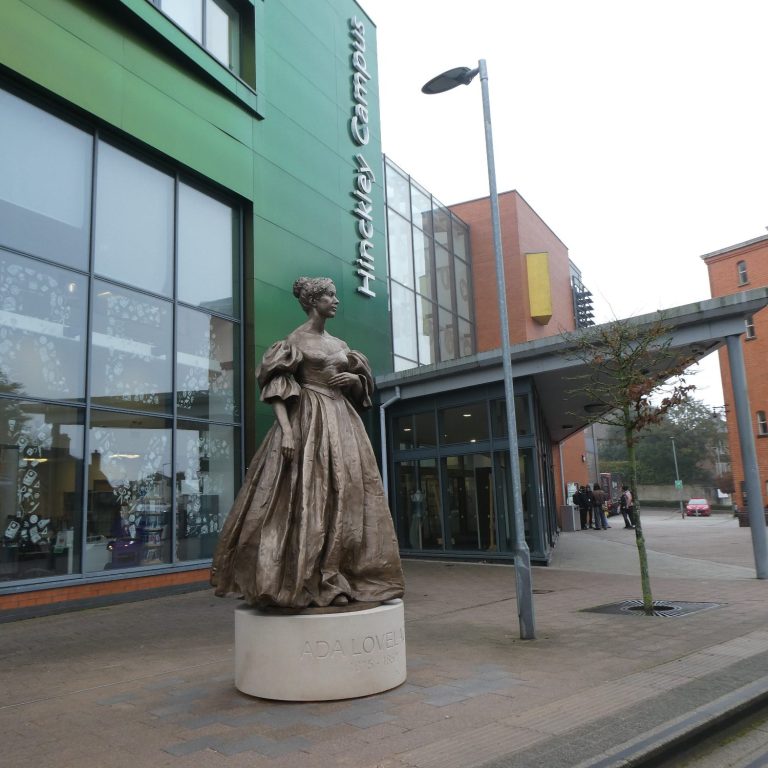
North Warwickshire and South Leicestershire College Estates Manager, Jonathan Howard, supported the project, ensuring Ada has a home in front of the Hinckley Campus in perpetuity.
See the Statue
Finding Ada
The statue of Ada Lovelace can be found outside the main entrance of North Warwickshire and South Leicestershire College's Hinckley Campus, Lower Bond St, Hinckley LE10 1QU